
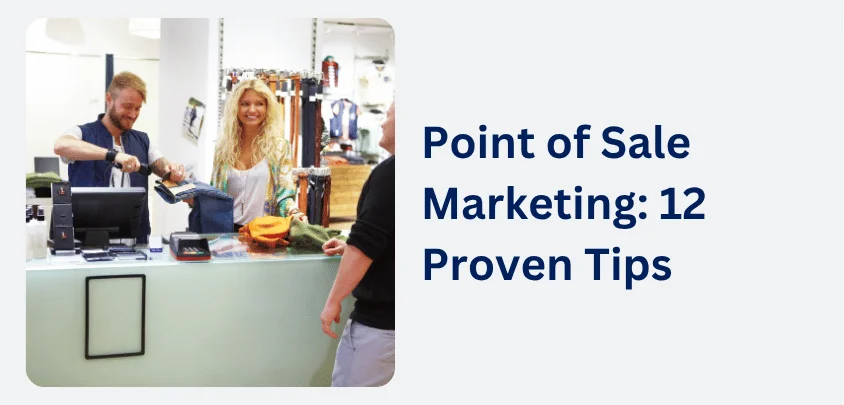
Point of sale (POS) marketing is one of the most effective ways to increase revenue without spending more on advertising. Instead of focusing on attracting new customers, it helps businesses generate more value from customers who are already in the store and ready to make a purchase.
Whether you run a retail store, supermarket, pharmacy, gift shop, clothing boutique or convenience store, your checkout area can become one of the most profitable spaces in your business. The right product displays, promotions and sales techniques can encourage customers to add one or two extra items to their basket, increasing your average transaction value throughout the day.
This guide explains what point of sale marketing is, why it works and twelve practical strategies that can help you increase in-store sales.
What Is Point of Sale Marketing?
Point of sale marketing refers to the promotional activities that take place where customers complete their purchase. Traditionally, this means the checkout counter or cash register, but modern POS marketing can also include self-service kiosks, payment terminals, customer displays, and even digital receipts.
Unlike traditional advertising that aims to attract new customers, point of sale marketing focuses on people who have already decided to buy. Because they are already committed to making a purchase, they are generally more open to adding another product if it provides value or convenience.
Common examples include:
- Chocolates and snacks near the register
- Batteries beside electronic products
- Gift cards at the checkout
- Drinks displayed near payment terminals
- Accessories matched with larger purchases
- Limited-time offers promoted during checkout
Although each additional purchase may only add a few dollars, these small increases can make a significant difference over hundreds or thousands of transactions.
Why Point of Sale Marketing Matters
Many retailers invest heavily in attracting customers but pay little attention to the final stage of the buying journey.
This is often where additional revenue can be generated most easily.
Point of sale marketing offers several important benefits.
- Increases average transaction value
- Encourages impulse purchases
- Promotes new products
- Improves stock turnover
- Introduces seasonal promotions
- Creates opportunities for cross-selling
- Increases customer engagement
- Improves overall profitability
Unlike expensive advertising campaigns, many POS marketing improvements require only better product placement, clearer promotions or improved staff training.
12 Proven Point of Sale Marketing Tips to Boost In-Store Sales
1. Place Low-Cost Impulse Products at the Checkout
The checkout area should never be treated as unused space.
Customers often spend a few moments waiting while payments are processed, giving them time to notice nearby products. This makes the checkout one of the highest-converting areas in any retail store.
Products that work particularly well include:
- Chocolate
- Soft drinks
- Phone chargers
- Lip balm
- Batteries
- Travel-sized products
- Socks
- Stationery
- Toys
- Gift wrapping
Focus on products that customers can purchase without much consideration. Lower-priced items generally perform better because the buying decision feels easy and low risk.
Refreshing these displays regularly also encourages repeat customers to notice something different each visit.
2. Bundle Complementary Products
Customers appreciate convenience.
Instead of encouraging random purchases, suggest products that naturally work together.
Examples include:
- Mobile phone + screen protector
- Printer + ink cartridges
- Coffee machine + coffee beans
- Candle + candle holder
- Wine + bottle opener
- Hair dryer + heat protection spray
- Shoes + shoe cleaner
Bundles help customers complete their purchase while increasing average basket value.
Even without offering discounts, simply displaying related products together often increases sales because customers immediately recognise the connection.
3. Use Eye-Catching Point of Sale Displays
The way products are presented can have just as much influence as the products themselves.
Well-designed displays immediately attract attention and encourage customers to stop and look.
Popular display options include:
- Counter displays
- Floor stands
- End-cap displays
- Dump bins
- Feature tables
- Seasonal displays
Avoid overcrowding.
A clean display with a small selection of featured products usually performs better than shelves packed with too many choices.
Displays should also be refreshed throughout the year to match holidays, seasonal demand, and new product launches.
4. Create Limited-Time Promotions
People naturally respond to urgency.
Limited-time offers encourage customers to buy now instead of delaying their purchase.
Examples include:
- Weekend specials
- Buy one, get one half price
- Free gift with purchase
- End-of-season clearance
- Holiday promotions
- New product launch offers
The key is authenticity.
If every promotion appears permanent, customers quickly stop paying attention. Genuine short-term offers create excitement and encourage immediate action.
5. Use Clear Promotional Signage
Customers should understand your promotion within a few seconds.
Complicated posters with too much information often go unread.
Instead, keep messages short and direct.
Examples include:
- New Arrival
- Best Seller
- Save $10
- Limited Time Only
- Staff Favourite
- Perfect Gift
- Buy Two, Save More
Large text, high-quality images, and simple pricing make promotions much easier to understand while customers continue shopping.
6. Train Staff to Upsell Naturally
Technology plays an important role, but friendly customer service remains one of the strongest sales tools.
Rather than asking every customer the same scripted question, staff should recommend products that genuinely add value.
Examples include:
- “Would you like a screen protector with your new phone?”
- “These batteries are recommended for that toy.”
- “Most customers also purchase this cleaning product.”
Good upselling feels helpful rather than pushy.
Staff who understand the products can confidently recommend useful additions that improve the customer’s overall purchase.
7. Personalise Offers Using Customer Data
Modern point of sale marketing goes beyond displaying products at the checkout. Many businesses now use customer purchase history to make more relevant recommendations.
If your POS system stores customer information through a loyalty program or customer accounts, you can identify buying habits and tailor promotions accordingly.
For example:
- A pet store can offer pet treats to customers who regularly buy dog food.
- A bottle shop can recommend a premium wine to customers who frequently purchase similar products.
- A pharmacy can remind customers when vitamins or skincare products are due for replacement.
- A clothing retailer can notify customers when new arrivals match their previous purchases.
These personalised recommendations are more effective than generic promotions because they are based on products the customer is already interested in.
Even simple customer data can help businesses create more relevant offers, improve customer satisfaction, and increase repeat purchases.
8. Reward Repeat Customers with Loyalty Programs
Acquiring a new customer usually costs much more than encouraging an existing customer to return.
A loyalty program gives customers another reason to shop with your business instead of your competitors.
Popular loyalty rewards include:
- Earn points for every dollar spent
- Birthday rewards
- Exclusive member discounts
- Free products after multiple purchases
- VIP pricing
- Early access to promotions
- Member-only events
The checkout is the ideal place to invite customers to join your loyalty program. Registration should be quick and simple so customers can sign up while completing their purchase.
A good loyalty program not only increases repeat visits but also provides valuable customer data that can improve future marketing campaigns.
9. Refresh Your Checkout Displays Regularly
Customers quickly become blind to displays they see every week.
If the same products remain at the checkout for months, regular customers will eventually stop noticing them.
Rotating products keeps your checkout area interesting and encourages impulse purchases.
You might rotate displays based on:
- Seasons
- Public holidays
- School holidays
- Local events
- Product launches
- Clearance campaigns
- Trending products
Even moving products to a different position or updating promotional signage can attract fresh attention.
Review your checkout displays every few weeks and replace slow-selling products with new items to keep the space working as effectively as possible.
10. Use Digital Displays to Promote Products
Digital signage has become increasingly popular because promotions can be updated instantly without printing new posters.
Instead of displaying a single printed promotion for weeks, businesses can rotate multiple offers throughout the day.
For example:
Morning
- Breakfast specials
- Coffee promotions
Afternoon
- Lunch deals
- Meal upgrades
Evening
- Family dinner offers
- Dessert promotions
Retail businesses can also promote:
- New arrivals
- Limited-time discounts
- Best-selling products
- Upcoming events
- Loyalty program benefits
- Gift cards
Moving digital content naturally attracts more attention than static signs and allows businesses to respond quickly to changing promotions.
11. Encourage Gift Card Purchases
Gift cards are often overlooked as a point of sale marketing tool.
They generate immediate revenue while introducing new customers to your business when the recipient redeems the card.
Gift cards work particularly well for:
- Cafés
- Restaurants
- Retail stores
- Beauty salons
- Spas
- Florists
- Bookshops
- Clothing stores
Promote gift cards throughout the year, not just during Christmas.
They are also popular for birthdays, Mother’s Day, Father’s Day, graduations, weddings and corporate gifts.
Displaying gift cards near the checkout reminds customers of these occasions while they are already making a purchase.
12. Use Sales Reports to Improve Your Strategy
Successful point of sale marketing isn’t based on guesswork.
Your POS system collects valuable sales data every day, allowing you to see which promotions actually increase revenue.
Useful reports include:
- Best-selling products
- Average transaction value
- Average items per sale
- Product combinations
- Peak trading hours
- Seasonal sales trends
- Slow-moving inventory
- Gross profit by product category
For example, you might discover that customers who buy premium coffee beans often purchase reusable coffee cups, or that gift wrapping sells particularly well during weekends.
These insights allow you to adjust product placement, create better bundle offers and replace underperforming promotions with more profitable alternatives.
Businesses that regularly review sales reports can continuously improve their point of sale marketing based on real customer behaviour.
Common Point of Sale Marketing Mistakes
Even well-designed promotions can fail if they are poorly executed.
Avoiding these common mistakes will help you achieve better results.
Overcrowding the Checkout Area
Trying to display too many products often overwhelms customers.
Instead of encouraging additional purchases, clutter makes it harder for products to stand out.
Choose a smaller selection of carefully chosen items that are easy to browse while customers wait to pay.
Promoting Expensive Products at the Checkout
Checkout marketing is designed for quick purchasing decisions.
High-value products usually require more consideration and are better displayed elsewhere in the store where customers can compare features and ask questions.
Reserve the checkout area for affordable products that customers can add to their purchase with little hesitation.
Leaving Displays Unchanged
Customers who visit regularly become familiar with their surroundings.
If displays remain the same for months, they lose their ability to attract attention.
Regularly rotating products, updating signage, and introducing seasonal promotions keeps your checkout area fresh and engaging.
Poor Product Placement
Products should be clearly visible without interfering with the payment process.
Items placed too low, too high, or behind other products are less likely to be noticed.
Position your highest-priority products where customers naturally look while waiting to pay.
Inconsistent Staff Training
Some employees naturally recommend additional products, while others never mention them.
Without consistent training, sales opportunities are missed every day.
Provide staff with product knowledge and practical upselling examples so every customer receives the same high-quality service.
How to Measure the Success of Your Point of Sale Marketing
Every promotion should be measured to determine whether it improves business performance.
Some of the most useful metrics include:
- Average transaction value
- Average number of items per sale
- Impulse purchase revenue
- Bundle sales
- Loyalty program registrations
- Gift card sales
- Repeat customer rate
- Gross profit
- Promotional conversion rate
Review these reports regularly and compare results before and after introducing new promotions.
Small improvements across multiple areas often have a significant impact on annual revenue.
How POSApt Helps Improve Point of Sale Marketing
A modern POS system can do much more than process payments. It can actively support your marketing efforts while providing valuable data to help improve future promotions.
Upsell Prompts
POSApt can prompt staff to recommend complementary products during checkout, helping increase average transaction values while ensuring every customer receives consistent recommendations.
Loyalty Program
Reward customers with points, member benefits, and exclusive promotions that encourage repeat visits and strengthen long-term customer relationships.
Digital Gift Cards
Sell physical or digital gift cards directly through the POS system, creating an additional revenue stream while attracting future customers back to your business.
Digital Signage
Promote new products, seasonal campaigns, and special offers using digital displays that can be updated instantly without printing new promotional materials.
Customer Display
Show customers their purchases while displaying promotional messages, loyalty rewards or special offers during the payment process.
Sales Reporting
Access detailed reports that reveal your best-selling products, highest-performing promotions, average transaction values, and customer purchasing trends.
Inventory Management
Track stock levels in real time to ensure popular impulse products remain available while identifying slow-moving inventory that can be promoted through point of sale marketing campaigns.
Final Thoughts
Point of sale marketing or advertising is one of the most practical ways to increase in-store sales because it targets customers who have already made the decision to buy.
Simple improvements such as better product placement, attractive displays, personalised recommendations, loyalty programs and staff training can steadily increase the value of every transaction. When these strategies are supported by a modern POS system with features such as sales reporting, digital signage, customer displays and upsell prompts, businesses can continually refine their marketing based on real customer behaviour.
Rather than relying solely on attracting more customers, businesses that invest in effective point of sale marketing often discover that increasing the value of existing sales is one of the fastest and most cost-effective ways to improve profitability.


